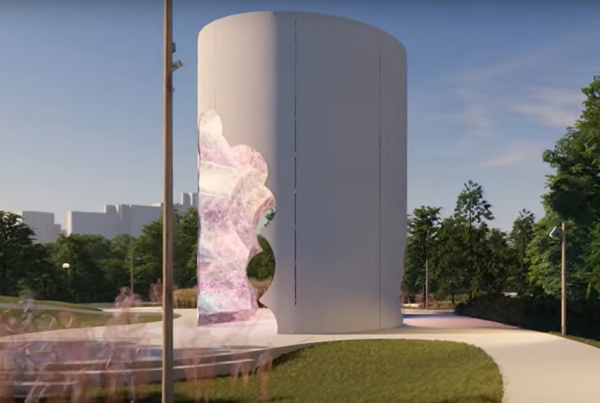
A design team of more than 100 engineers and personnel is putting the finishing touches on plans for a new, $170-million waste processing facility on Prince Edward Island that will convert municipal solid waste and scrap wood into power for the province’s district energy network.
The facility will be capable of processing 90 per cent of the province’s total black cart residential waste, diverting up to 49,000 tonnes of solid waste from going to the landfill annually.
Energy from the plant and an attached wood biomass facility will provide power to connected customers. It’s an approach that has not yet been taken by any other energy-from-waste facilities in North America, with most incorporating either turbines or small hot water heating systems.
The new operation will replace an existing 40-year-old facility that is at the end of life. Energy produced by the plant will replace the use of fuel oil for heating more than 145 connected buildings in Charlottetown, including the Queen Elizabeth Hospital, University of PEI, and multiple schools and residences. It will also be used to generate chilled water for customers in the summer.
“The new facility is being built adjacent to the existing facility,” explains Shane Ravindranath, director, complex projects at Enwave. “This will allow for seamless transition from the existing facility to the new without extended periods of downtime.
“The existing plant will be in operation throughout the duration of the construction of the new facility, and components of the existing facility will remain in operation after construction is finished. This includes the biomass boiler system, the steam turbine generators and other ancillary components.”
The proximity of the new structure next to a fully operational energy facility adds complexity to the construction process and, as a result, requires careful planning.

“The construction team must carry out all excavation, structural work, equipment installation, and commissioning activities around live systems that cannot be shut down,” says Ravindranath. “This introduces several layers of complexity, including safety, operational continuity, complex tie-ins and space constraints.
“The key mitigant to this is a detailed design phase including an integrated team with contractors and operational staff to develop a mitigated risk-based construction plan involving lots of communication and co-ordination.”
Design-builder for the project is a joint venture between Maple Reindeers and Marco Group Ltd. Contractors plan to mobilize to the site by the end of the year and begin foundation work in early 2026. After the foundation is complete, the building structure and equipment will be installed.
The building should be weathertight in summer of 2027, with supplemental mechanical and electrical equipment installations taking place afterwards. Construction is expected to be completed in spring 2028, with commissioning and testing of the plant wrapping up that summer.
The facility itself will be made of various types of material, including concrete, steel, cladding and glass. It will have a new waste receiving area with a crane, furnace grate, boiler and flue-gas treatment system.
Waste will be delivered from trucks and handled using a semi-automated crane. This crane will transfer the waste into the processing plant, where it is fed across a combustion grate at the inlet to the boiler. The boiler will combust the waste at high temperatures to produce steam, hot water and power. The ash from the combustion process will be removed from the boiler, and the flue-gas treatment system will filter and treat the exhaust to meet local requirements.
The facility will provide both electricity and heating to serve the region. Heating will be in the form of steam and hot water will be distributed through a network of pipes to Charlottetown customers.
Using municipal solid waste instead of sending it to landfill will lead to a savings of up to 908,000 tonnes of CO2 by 2052, equivalent to taking 278,000 cars off the road.
The new facility will enable Enwave to nearly double its waste processing capacity while reducing greenhouse gas emissions.
“The environmental benefits associated with this waste diversion include a carbon emissions reduction of 17 per cent over the life of the facility, representing close to 900,000 tonnes CO2 avoided,” says Ravindranath, noting it is being accomplished by reducing the annual use of fuel oil and diesel by 75 per cent and 70 per cent, respectively.
The project was in development prior to the acquisition of the PEI Energy System by Enwave in 2017. The company has undertaken the expansion in partnership with the province as part of the effort to address the growing need to identify sustainable ways to deal with waste in P.E.I.
Ravindranath says the project team has faced hurdles but has been committed to the project and found ways to navigate around them.
“Through the development process, the project team has navigated significant challenges such as the post-COVID impacts on construction cost, supply chain impacts, and tariffs,” says Ravindranath.
There is a growing need for solutions to the problem of waste. A World Bank report indicates global waste will rise by 70 per cent by 2025.