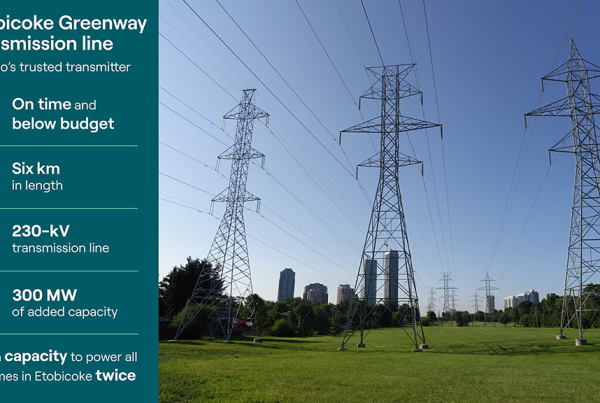
The term “data sovereignty” is becoming a popular expression as the United States undergoes an incredible buildout of hyper-scale data centres. As a result, other countries are becoming very protective about who controls the privacy of data created within their own borders.
In attempts to lure data centre development to Canada, the federal government and some provinces are pitching this country’s relatively inexpensive electricity and cool climate as a good destination for these voracious consumers of power and cooling. However, the topic is far from simple. As outlined last week, data centres need massive amounts of reliable electrical power 24/7 for their computers.
Data centres also cause concern over the volume of water required for the massive cooling systems inside the facilities. The Environmental and Energy Study Institute says “large data centers can consume up to five million gallons per day, equivalent to the water use of a town populated by 10,000 to 50,000 people.”
“One of the great things about building in Canada, and in colder climates, is that we can just use free air cooling from outside air temperatures,” Alistair Speirs, general manager of Microsoft’s Azure global infrastructure, told the CBC.
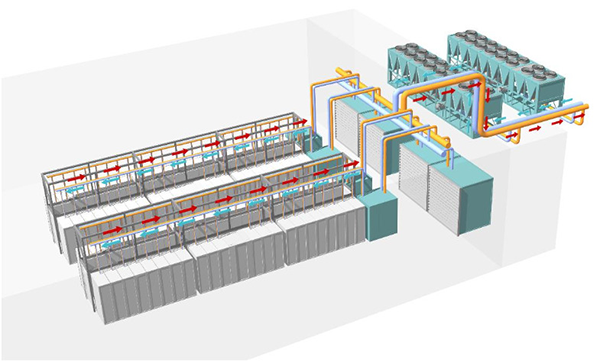
However, just opening windows is not a realistic 12-month solution. It gets hot in this country during the summer, so mechanical cooling is required like anywhere else, and that means water.
In Canada, as in many parts of the world, water cooling systems often use municipal water sources. Yet as the CBC suggested recently, “Canada is jumping into the AI construction race with few mechanisms to protect its water supply.”
In early April, it was announced Microsoft would undertake a multibillion-dollar expansion of its AI infrastructure in Ontario. At least two of the Microsoft data centres in southern Ontario have been cleared by municipal authorities to consume huge volumes of municipal drinking water for cooling purposes. One facility in Toronto’s west end has been approved to use approximately 1.2 billion litres per year. Another in Vaughan, just north of Toronto, is expected to consume 730 million litres of water annually.
However, Microsoft says water usage for cooling at its data centres in Ontario and those planned for Québec will be limited by, “relying primarily on outside air and using water for cooling less than five per cent of the year. When water is used, it is cycled efficiently through the system multiple times and managed in compliance with local regulations. This results in relatively low projected water withdrawals that reflect both local conditions and responsible designs.”
Closed loop systems like this can certainly reduce water use in data centres. These systems use a cooling medium (water or glycol) that circulates through sealed, leak-proof pipes and does not come into contact with the air. No water evaporates, so the same water is recycled continuously. However, these systems are expensive, so not every proposal includes their use. As an alternative, reclaimed industrial water can also supply large amounts of water without impacting a community’s drinking water.
Kevin O’Leary’s $70 billion Wonder Valley data centre proposal in Greenview, Alta. will, if built, use a closed loop system with water drawn from the nearby Smoky River. A $10 billion data centre project proposed by Synapse Data Centre Inc. in Olds, Alta., will also use a closed loop system, based on municipal water.
Water usage concerns have hit a fever pitch in the drought-stricken southern United States, where high heat and drought conditions are arousing serious public reaction to the arrival of hyper-scale data centres. Canada’s mid-west has similar issues concerning heat and water, leaving some critics suggesting that responsible environmental stewardship seems to be lacking in Canada when it comes to the development of data centres.
“Governments love anything that sounds large, rich and futuristic. They are much less interested in the dull, essential work of scrutiny, tradeoff analysis and public accountability,” says Canadian environmental group Clean 50. It points to Alberta as having produced, “a near-perfect case study in how not to do climate or industrial policy.”
News platform Energy Mix reported an acting approvals program manager for Alberta Environment and Protected Areas (AEPA) decided in March the Synapse data centre project did not require an Environmental Impact Assessment. A similar decision was made concerning O’Leary’s Wonder Valley proposal.
One AEPA regulatory assurance manager went so far to admit to an Olds Town Council meeting, “I’m a bit of an old dog, so I don’t know what this AI stuff is really all about. I just want to go and play hockey.”
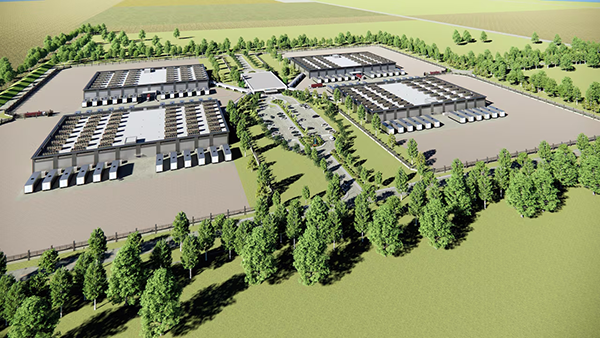
Bell Canada has announced it will build a 300MW data centre in Sherwood, Sask., near Regina, as part of its Bell AI Fabric network. Once complete, Bell says it will be “the largest purpose-built AI data centre development anywhere in Canada.”
Aware of public concerns, John Watson, Bell Canada’s group president, told the CBC said the facility will not draw water from municipal water sources, but will instead use a water-smart and energy-efficient design that includes a closed-loop cooling system.
As public awareness of data centre consequences grows, the road forward may not be totally smooth. Bell’s sensitivity to local concerns will be critical to the growth of data centres in Canada. A recent Abacus survey revealed only 16 per cent of Canadians expressed outright support for a local project, with 39 per cent saying “it depends.”
“The path forward will hinge on engagement, transparency and the ability to demonstrate clear, localized benefits,” concluded Abacus. “Once opposition crystallizes, it can become difficult to reverse.”
John Bleasby is a freelance writer. Send comments and Climate and Construction column ideas to [email protected].