The rapid expansion of sprawling data centres in the U.S. is fuelling one of the largest construction booms in modern American history, with billions of dollars pouring in to provide much-needed electricity to power AI-driven systems, cloud computing and digital infrastructure.
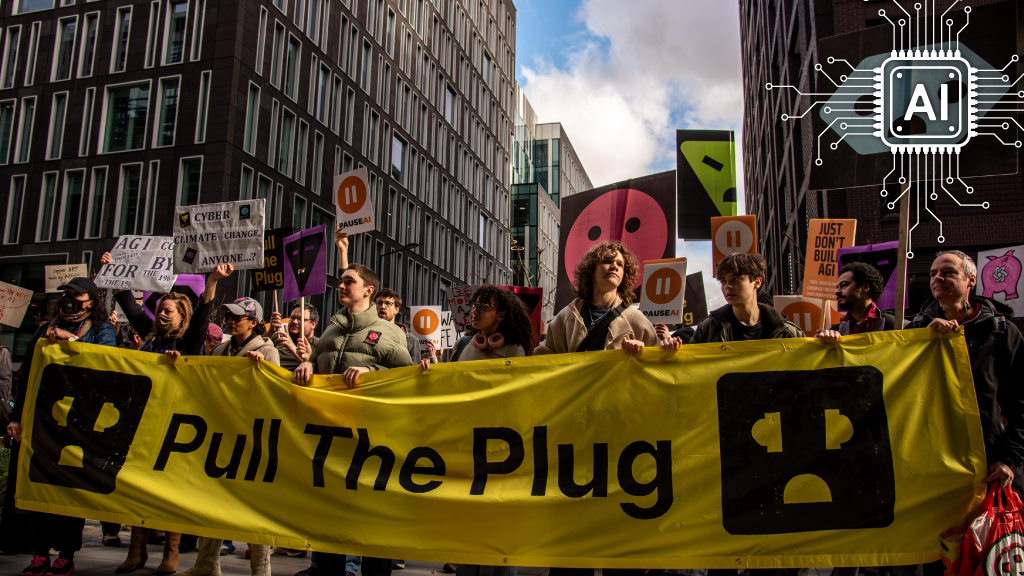
But as developers race to build massive server farms across the United States, a growing backlash from residents, activists and local politicians is threatening to slow the industry’s expansion.
What was once considered largely invisible infrastructure has become a flashpoint in communities from Virginia to Arizona, with concerns ranging from soaring electricity demand and water consumption to noise pollution, environmental impacts and declining property values.
Opposition groups have succeeded in blocking or delaying an estimated $64 billion worth of data centre projects over the past two years in the U.S., according to a report by advocacy tracker Data Center Watch.
The report found $18 billion in projects were outright blocked while another $46 billion faced delays amid mounting local resistance. Data Center Watch identified at least 142 activist groups operating across 24 states campaigning against new developments.
The AI-driven construction surge itself remains enormous. U.S. data-centre construction starts reached $77.7 billion in 2025, up nearly 190 per cent year-over-year, according to industry figures. Average projects now exceed 613,000 square feet with average values topping $633 million.
Yet the unprecedented scale of development is increasingly colliding with local politics.
In Indianapolis, for example, more than a dozen bullets were fired at the house of city council member Ron Gibson, a Democrat who had backed rezoning for a data centre proposed by developer Metrobloks. A handwritten note reading, “No Data Centres” was left on his doorstep.
In Festus, Miss., south of St. Louis, four incumbent council members who approved a $6-billion data centre over the objections of residents, were soundly defeated. Across the U.S., residents have organized petitions, lawsuits and political campaigns to stop projects.
“Data centres are the new NIMBY flashpoint,” the report by Data Center Watch concluded, comparing opposition to earlier battles over factories, warehouses and energy infrastructure.
While environmental groups often focus on carbon emissions and water consumption, concerns about electricity demand and rising utility bills are uniting both sides of the political spectrum.
Forty-two activist groups are now operating in Virginia alone, including the Data Center Reform Coalition, which co-ordinates opposition campaigns among environmental organizations, homeowner groups and conservation advocates.
A number of massive projects in that state have encountered fierce resistance.
The proposed $24.7-billion PW Digital Gateway project in Prince William County, led by QTS Realty Trust and Compass Datacenters, has been delayed by lawsuits and community protests over noise, environmental damage and power-grid strain.
In Warrenton, residents opposed to a proposed Amazon data-centre campus voted out every town council member who supported the project.
The newly elected council, composed entirely of project opponents, now has the mandate to block the data centre.
Other municipalities where projects have also been delayed include Culpeper County ($12 billion), King George ($6 billion) and Midlothian ($3 billion).
In Arizona, developer Tract withdrew a proposed $14-billion project after residents objected to building heights, noise and resource demands.
In Missouri, local authorities in Peculiar amended zoning rules to effectively prohibit data centres after grassroots campaigns raised concerns about visual impacts, noise and falling property values.
Data Center Watch has identified more than 23 petitions with more than 31,000 signatures since 2022, initiated by both groups and individuals opposed to data centres.
Energy analyst and author Robert Bryce says the backlash resembles earlier fights over wind farms, solar projects and other large-scale infrastructure developments – but with additional concerns unique to AI facilities.
“I’ve never seen anything like the raging backlash against data centres,” Bryce wrote recently on his Substack publication AI Rejected: Tracking the Great Data Center Revolt.
He argues the explosive growth of AI infrastructure is generating fears over soaring electricity costs, water scarcity and even distrust of major technology companies.
“The backlash against data centres looks a lot like the fights against Big Wind, Big Solar, and Big Battery,” Bryce wrote. “People are concerned about their neighborhoods, property values, viewsheds and noise.”
But he added AI facilities raise additional worries because of their extraordinary energy and cooling requirements.
Modern hyper-scale data centres consume vast amounts of electricity, in some cases exceeding the power demands of small cities. Cooling systems can require millions of gallons of water annually, particularly in warmer climates. Noise from cooling fans and backup generators operating around the clock is also a concern.
Some communities fear data centres may increase residential electricity prices as utilities scramble to expand generation and transmission capacity.
Construction industry analysts say the political resistance is becoming a significant risk factor for developers and investors. Cancellations of data centre projects quadrupled in 2025 compared to the previous year.
Developers are increasingly being forced to negotiate community-benefit agreements, redesign projects or search for alternative sites.
Even traditionally business-friendly jurisdictions are reconsidering incentives and regulations.
Politicians are taking notice.
Georgia municipalities have imposed moratoriums on new projects. Maine lawmakers are considering temporary restrictions on large developments and Texas legislators have debated additional oversight measures.