A long-time stick‑frame builder serving remote Indigenous and rural communities as far north as the Arctic, Wayne Allary recently shifted gears, partnering with Cornerstone Timberframes to deliver timber‑frame kit homes built with glulam members.
The idea, he says, is to build better quality, energy efficient homes that can be erected in 45 days, cutting months off the time to construct a conventional house.
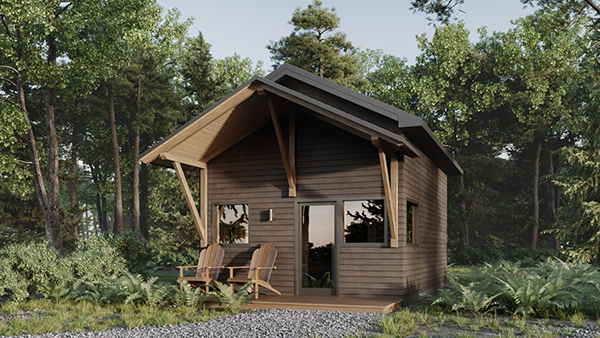
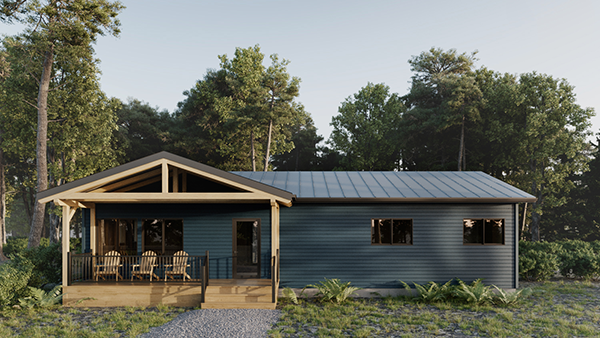
After completing five of Cornerstone’s A-frame kit residences in the First Nation community of Shoal Lake 39A, east of Winnipeg, Allary’s general contracting firm Waasa Indigenous Services Inc. erected five of Cornerstone’s prefabricated kit bungalows of various designs with full basements.
Not only were they quick to erect, the homes, which were prefabricated in Cornerstone’s manufacturing facility near Winnipeg, required fewer trades.
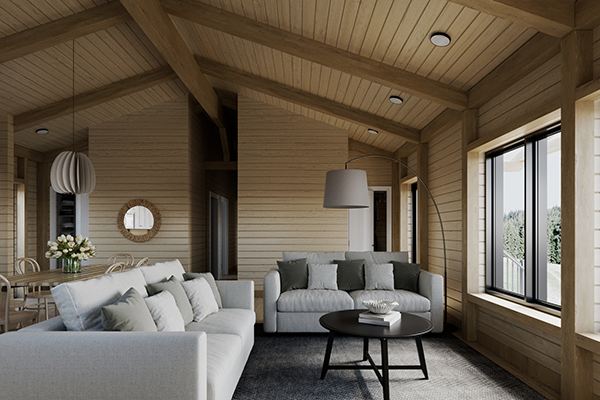
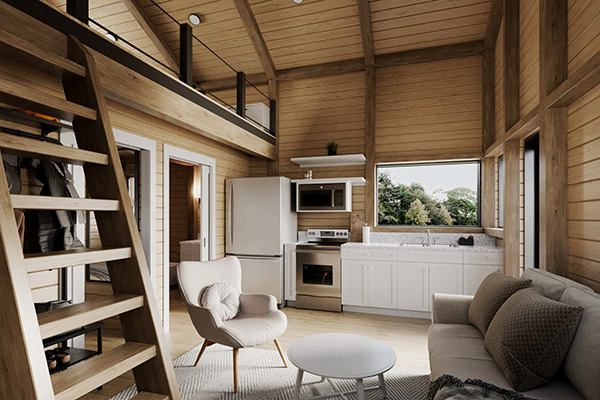
The company’s timber kit houses with glulam beams feature flexible layouts, with moveable non‑load‑bearing walls, says Brenden Valks, sales and marketing manager at Cornerstone.
They are about 30 per cent more energy‑efficient than conventional homes, he says, thanks largely to an envelope insulated on the exterior with eight inches of rigid foam running continuously from the foundation footings to the roof.
“There is no place heat can escape or cold can get in,” says Allary.
Heat recovery ventilators exchange stale indoor air with fresh outdoor air while recovering heat from the outgoing air stream.
While kit homes cost more than traditional stick frame houses to construct, Valks points out that speed of erection, energy efficiency and long-term durability justify the assemblies.
1/2
CORNERSTONE TIMBERFRAMES
2/2
CORNERSTONE TIMBERFRAMES
All of the components are prefabricated and pre-fit before leaving the Cornerstone’s fabrication plant and everything is sequenced prior to shipping to ensure ease of assembly on site, he says.
Allary says Waasa offers training for community residents who are interested in learning how to build the kit homes.
“Once we train them, they will be able to work alongside of us and hopefully if you build enough houses with them, they can take over with minimal management,” says Allary.
Having that competition won’t put him out of work as there is a crushing demand for housing in northern Ontario and Manitoba, he points out.
“As an aboriginal person, I really want to empower our people to be whatever they can be.”
Allary says that from the first day residents enter their new homes, Waasa walks them through how everything works — from the HRV and the home’s controls to its safety features.
While Shoal Lake was Cornerstone’s “first set of kit houses,” it is in discussions with two other communities for similar housing models and it is also working on the design of a kit four-plex for another.
Cornerstone may also prefabricate a number of 300 to 325 square foot tiny homes in an indigenous community, Valks says.
To address the growing housing demand, the prefabricator plans to increase plant production from three shifts to four and add new equipment purchased in Europe for specialized panelization.
“Right now, we are probably doing five to eight (houses) a year, but we are on pace, based on projections, to do 18 to 24 next year,” says Valks.
For that housing market to continue to grow in underserved, remote communities over the next five years, he says developments need to have Indigenous leaders on board and government funding in place.
Allary is optimistic the industry will bloom.
“We are on to the tip of the iceberg of how this housing is going to take off for us. We’re getting more traction every day, not only in First Nation communities but rural areas as well.”