A milestone in the delivery of critical infrastructure for Port Colborne, Ont. was achieved with the July 9 installation of the first of two side-by-side 1.5-metre-diameter 310-metre-long concrete encased servicing tunnels through bedrock right under the Welland Canal.
The tunnelling operation by Ward & Burke Microtunneling took 33 days to complete.
Boring for the second tunnel began in mid-August and is expected to be completed by the end of September.
Four forcemains varying from 150- to 400-millimetre-diameter in size will be carried in the first tunnel, while the second tunnel will house a 500-millimetre-diameter forcemain and a 500-millimetre diameter watermain, for a total of six pipes under the canal from the west to the east side.
1/2
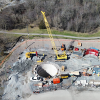
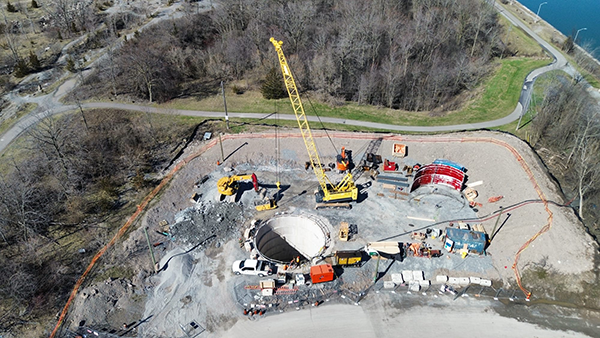
COURTESY NIAGARA REGION — Aerial view of the launch shaft construction site.
2/2
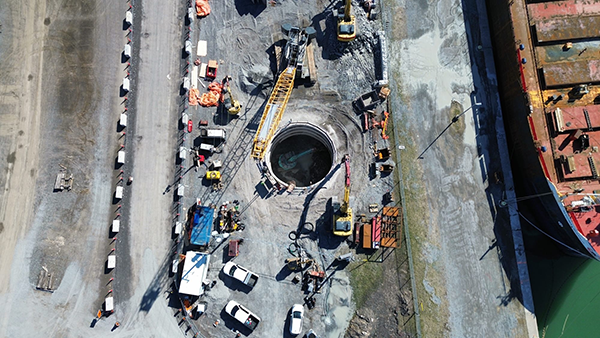
COURTESY NIAGARA REGION — Aerial view of construction of the receiving shaft where the tunnel was breaking through.
Rankin Construction is the general contractor, and Associated Engineering is the design consultant for the project, which is the culmination of four years of planning, with design starting in 2024.
The environmental consultant was GEI Consultants.
Niagara Region is leading the project in partnership with the City of Port Colborne.
The forcemains are needed to service, what is known, at the East Side Employment LandsCity of Port Colborne East Side Employment Lands ServicingStatusAwardValue$15.9MLocationPort Colborne, ON L3K 4G8SectorPublic – CityTypeWater/SewerData as of September 3, 2026View Project Page → and Asahi Kasei’s $1.7 billion manufacturing facility to produce lithium-ion battery separators as well as securing water supply to the east side of Port Colborne.
They will also replace the existing and aging Eastside Sewage Pumping Station Forcemain.
Installing the tunnels is a process that began with the excavation of a 21-metre-deep shaft on the west side of the canal and 17-metre shaft on the east side.
The next steps in the sequencing are boring the tunnels, followed by the insertion of the forcemains (and the watermain), and then the grouting of the tunnels, says Niagara Region’s director of water and wastewater services Phill Lambert.
“They (the tunnels) were drilled below the canal and the top of the tunnels are approximately 6.5 metres below the rock on the canal bottom.”
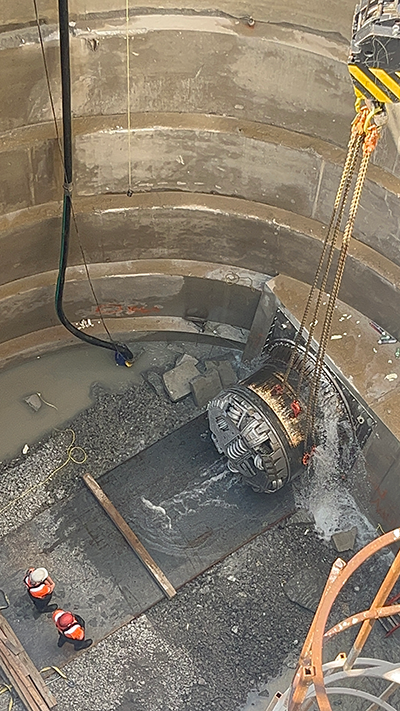
Asked about the project challenges, Lambert says the main one has been the water table and the excess pressure on the micro tunnel boring machine.
“It has been a balancing act on dealing with those pressures so as not to over or under excavate.”
Another challenge was the alignment’s varying slope and grade as the drive followed a curved rather than a straight alignment.
Ward & Burke commenced the installation from the launch shaft at a depth of 17 metres on a 10-degree grade and were required to maintain a minimum clearance of 6.5 metres beneath the bed of the canal while following the designed curve to the reception shaft at a depth of 23 metres.
Over the 310-metre drive length, continuous electronic position monitoring, supplemented by controlled survey verification at approximately 60 metre intervals, was undertaken to ensure the bore remained on the correct alignment and grade, says Lambert.
“This rigorous monitoring was critical to maintaining the required canal clearance and achieving an accurate breakthrough at the reception shaft.”
Once fully in place, the forcemains will connect with two new pumping stations being built on the east side of the canal by the City of Port Colborne to service the employment lands and the Asahi Kasei development, says Lambert.
Once fully operational, sewage will be pumped to the Seaway Wastewater Treatment Plant on the west side. That should occur by the third quarter of 2027, says project manager Gord Bell.
“This is and has been a wonderful project,” says Bell, citing the co-operation and participation of the city, the contractor and the St. Lawrence Seaway Management Corporation, whose approval was needed to traverse the canal.