Christopher Stone was checking out an apartment for sale in an 1885 brick rowhouse on Barrow Street in Manhattan’s West Village, unaware that a New York Times reporter was checking it out, too.
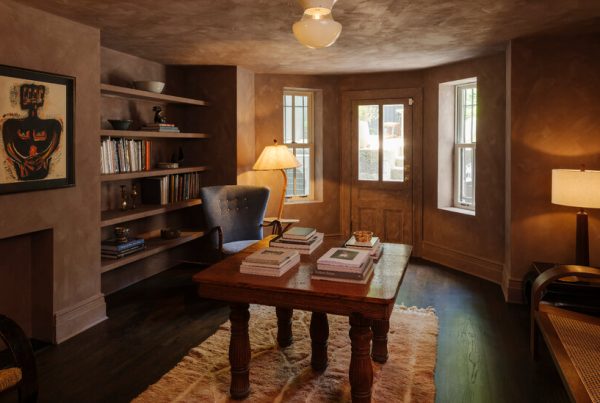
The journalist, Tracie Rozhon, was writing about the two-bedroom, one-bathroom home’s throwback décor, which had been largely handmade by bohemian artists in the 1920s. The primary bedroom, for example, was painted in a silver-and-black checkerboard pattern and furnished with a handmade crib filled with scrolls depicting voluptuous nude women wreathed in ferns.
“The paintings once circled the room — and could again someday,” Ms. Rozhon wrote.
The 600-square-foot co-op, which Ms. Rozhon described as “Lilliputian,” had seven offers by the time the article was published, on April 15, 1999, including one from Mr. Stone, who bid under the $275,000 list price (about $537,000 adjusted for inflation).
After the top bidder backed out, Mr. Stone raised his offer to $275,000 and won it. His mother, he said, was horrified.
The problem with the co-op wasn’t that it was fanciful, but that it was crumbling. Especially the ceilings. This did not concern Mr. Stone so much, given that he was an architect.