BuildForce Canada has released its annual Construction and Maintenance Looking Forward reports for the residential and non-residential construction sectors. This particular story pertains to Nova Scotia and New Brunswick and covers the forecast period from 2026 to 2035. The Daily Commercial News will have more provincial breakdowns from across Canada as well as national coverage in upcoming articles.
HALIFAX – While residential construction may slow over the next decade in Nova Scotia, construction activity is still expected to grow thanks to major projects.
BuildForce’s outlook states residential construction investment enters the forecast period at a peak and is expected to rise again in 2026.
However, years after and into the early 2030s, levels are projected to recede as population growth slows and demand for multi-unit residential structures declines. Renovation activity is expected to surpass new housing investment by 2032.
Non-residential construction will see sustained growth into 2029.
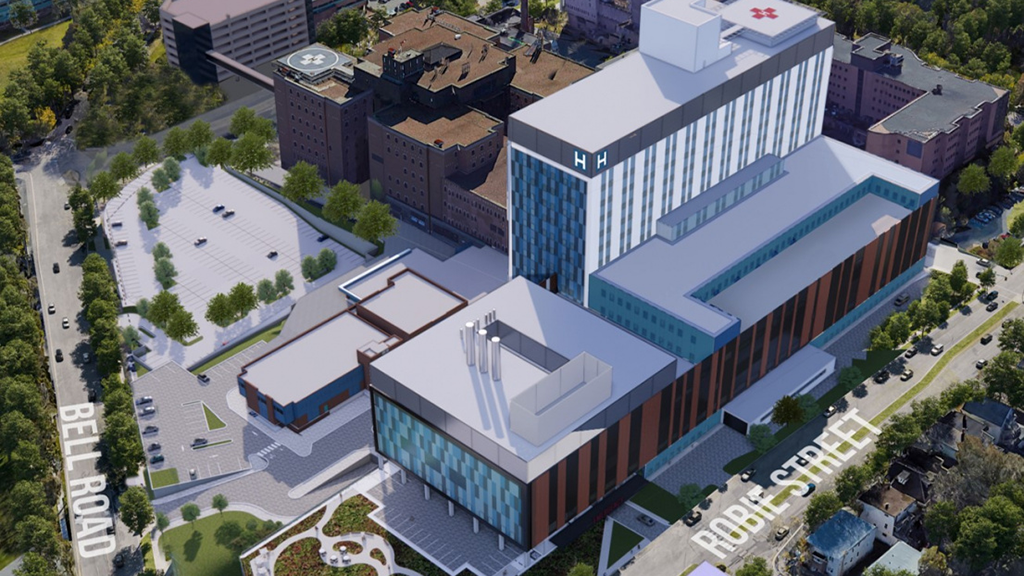
“Investment in the sector has been increasing steadily since 2023, driven by growth in engineering construction and industrial, commercial, and institutional (ICI) buildings,” the release states. “Investment in ICI buildings construction is projected to peak in 2029 with sustained activity on such key projects as the QEII Halifax Infirmary Site, the Cape Breton Regional Hospital Development and other health care facilities. Investment in engineering construction, meanwhile, is forecast to continue to trend toward a new peak into 2035, given planned and ongoing work on key mining and utilities projects.”
This will boost non-residential employment by 22 per cent above 2025 levels by 2035 and offset a contraction of 15 per cent in residential-sector employment.
“While major projects can significantly impact workforce outlooks, we are confident that these are solid indicators of where the market and workforce are going, based on what we know today,” said Duncan Williams, president and CEO of the Construction Association of Nova Scotia, in a statement. “As with any labour market information, many factors can change the fundamentals. This year’s reports show consistently high demand in most trades and occupations over the forecast. This, in turn, means we need to strengthen our attraction, training and retention efforts as a key focus over the next several years.”
Nova Scotia’s labour pool will also see the retirement of 8,200 workers, or 21 per cent of the 2025 labour force. The projected recruiting of some 7,200 first-time new entrants from the local population may lead to a shortfall of as many as 1,300 construction workers.
Aging labour force will challenge New Brunswick
According to BuildForce, construction activity in New Brunswick saw modest growth in 2025 as the residential sector reached a new high with investment activity, while investment in the non-residential sector was muted.
The ongoing tariff dispute between Canada and the U.S. significantly impacted the province’s growth. Tariffs and countervailing duties on softwood lumber in particular caused a notable contraction in exports and may present a further risk to economic growth in 2026.
The residential and non-residential sectors are slated to take different paths across the forecast period.
The residential sector enters the forecast period at an elevated level but demand is expected to slow over the decade, with housing start totals expected to contract by 56 per cent below 2025 levels by 2035.
In contrast, residential renovation activity is expected to strengthen steadily, surpassing new housing as the primary driver of residential construction investment in 2028, the organization highlights.
Non-residential construction activity is projected to remain a key source of growth as investment is expected to rise significantly beginning in 2027 with the start of core construction on the Mactaquac Hydro Dam Refurbishment project and continued growth in NB Power’s broader capital program. These large-scale engineering projects, combined with elevated levels of construction in the institutional and government buildings component – including a new RCMP detachment in Salisbury, work on the Fredericton Courthouse, and a new Correctional Centre in Minto – are expected to keep non-residential investment elevated into the mid‑2030s.
“There is a significant number of major projects that BuildForce is tracking for New Brunswick, but which have not been factored into this year’s forecast,” added Irwin Bess, executive director of BuildForce Canada. “These include small modular reactors, mines, renewable energy and energy-transmission projects. If any or several of these reach a final investment decision, they could have a significant impact on growth in the industry.”
By 2035, demand for residential construction labour is expected to decline by nearly 24 per cent compared to 2025 levels, while non-residential employment is expected to increase by approximately 13 per cent.
Total industry employment is expected to contract by 1,500 workers to 2035. The province is also anticipated to see the retirement of as many as 6,600 workers, or 20 per cent of its 2025 labour force, by 2035. The projected recruitment of some 6,400 first-time new entrants from the local population may create a surplus of as many as 1,300 construction workers in the province.
“The industry will need to carefully manage the changing mix of construction activity over the next decade,” said John-Ryan Morrison, executive director of the Construction Association of New Brunswick. “While residential construction is projected to moderate from historically high levels, non-residential construction is expected to remain strong, driven by major infrastructure, energy and institutional projects. The opportunity will be ensuring workers can transition to where demand exists while continuing to invest in training, recruitment and immigration strategies. With thousands of skilled workers expected to retire over the forecast period, workforce development must remain a priority for both industry and government.”